Plum Object Atelier — Practical reuse & low-cost interior craft Under-£15 Material Index
Course Track 01 · Everyday Containers

Found Objects, Fresh Roles

Every week, households discard containers manufactured to extraordinarily tight industrial tolerances: thick-walled apothecary condiment bottles, seam-welded olive oil tins, and heavy stoneware mustard crocks. The difference between a recycling-bin jar and a £65 studio ceramic vessel lies almost entirely in surface reflectance, neck collar details, and visual weight.

Anatomy of Form

De-Branding and Reading Silhouette

Commercial packaging designers rely on loud paper labels, plastisol lid rings, and embossed screw threads to signal convenience. When you strip away those commercial cues and obscure the screw thread at the neck, the underlying industrial form emerges clean and quiet.

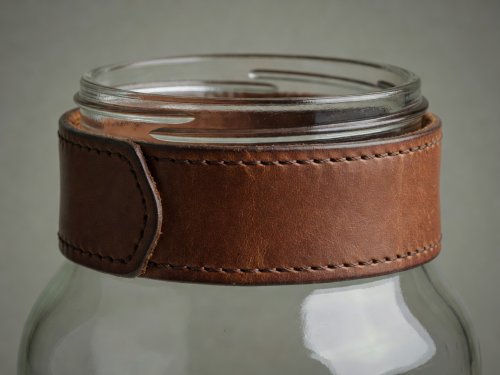
Soft-lit 3D render showing how a stitched vegetable-tanned leather cuff hides the螺旋 screw thread of a glass jar
Screw-Thread Masking Scrap Leather / Twine

Solving the "Jam Jar Neck" Problem

Nothing betrays an upcycled food jar faster than the exposed spiral thread at the rim. Wrap the collar in wet-moulded vegetable-tanned belt scraps, tight-whipped linen twine, or a 20mm sleeve of air-dry stoneware clay before painting.
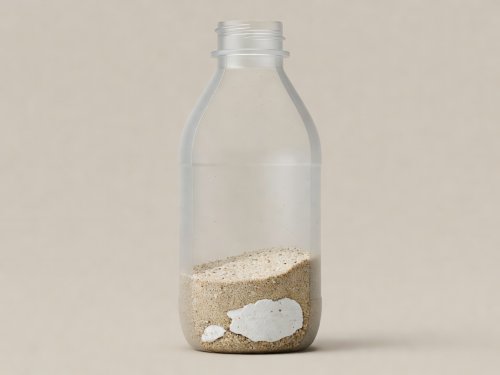
Soft-lit 3D render cross-section of a lightweight plastic bottle weighted at the bottom with builders sand and plaster of Paris
Centre of Gravity Casting Plaster

Adding Tactile Gravity

Lightweight HDPE detergent bottles or thin tin cans tip over as soon as you insert dried branches. Pour 4cm of wet casting plaster or dry kiln sand sealed with wax into the base to lower the centre of gravity and give the object a reassuring thud when set on a table.

Project Sequence A

Stoneware-Slurry Architectural Vessels

Inspired by mid-century Danish chamotte pottery and the quiet still-life vessels of Giorgio Morandi, this four-stage method builds a durable, water-resistant mineral crust over ordinary glass jars.

1

Alkaline Soak & Solvent Wipe

Submerge jars in warm water with two tablespoons of washing soda (sodium carbonate) for 30 minutes to dissolve water-based casein glues. For stubborn synthetic pressure-sensitive adhesives, rub with a cloth dampened in vegetable oil followed by 99% isopropyl alcohol. Let dry completely.

2

Collar Sculpting & High-Grip Priming

Press a bevelled coil of epoxy putty or air-dry polymer clay over the exterior screw threads to create a thick, lipped amphora rim. Brush the entire exterior with one thin coat of shellac-based adhesion primer (such as Zinsser BIN) so subsequent water-based layers chemically lock to the glass.

3

Mixing the Whiting & Grout Slurry

In a wide yoghurt pot, combine 3 parts dead-flat matt wall emulsion (#6b2155 damson plum or warm chalk), 1 part fine calcium carbonate (whiting powder), and 0.5 parts unsanded tile grout for tooth. Stipple the mixture onto the jar using a stiff hog-bristle brush in criss-cross strokes.

4

Dry-Burnishing & Matte Wax Seal

Once dry for 4 hours, lightly knock back high peaks with 240-grit sandpaper to expose subtle mineral flecks. Buff a thin coat of cold-pressed linseed oil or clear carnauba paste wax over the surface to prevent water spotting while keeping the finish velvety and matte.

Project Sequence B

Fluted Cork & Weighted Bottle Table Lamps

Turn a 750ml olive oil bottle or a tall cylindrical biscuit tin into a warm task lamp without drilling through glass. By using a side-exit brassswan-neck grommet adapter and an internal gravel ballast, the wiring stays completely above the bottle shoulder.

Raw Household Containers
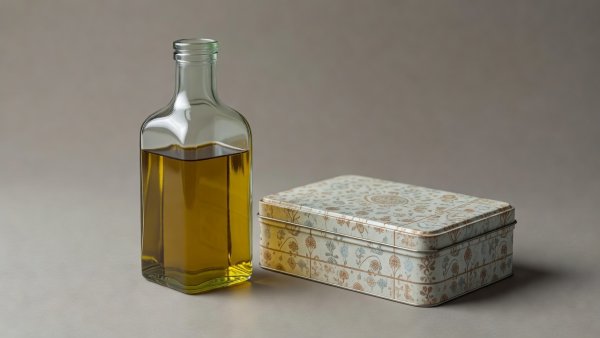
Soft-lit 3D render of a clear square olive oil bottle and a printed metal biscuit tin before upcycling

Printed Tin & Clear Glass Bottle

High-gloss metallic lithography and transparent green glass scatter visual clutter across a bedside table.

Finished Atelier Lighting
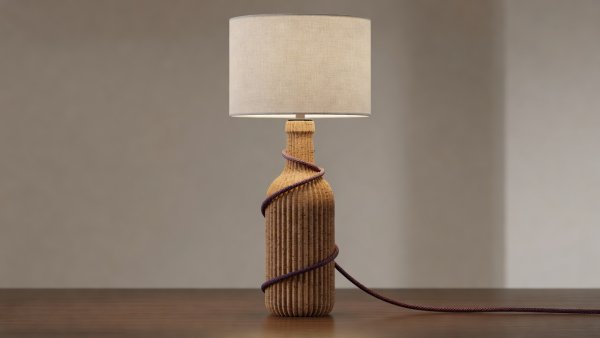
Soft-lit 3D render of the bottle wrapped in scored fluted cork with a braided plum fabric flex and linen drum shade

Fluted Cork Sleeve & Braided Linen Flex

Wrapped in 4mm acoustic cork scored at 10mm intervals on the reverse side so it curves cleanly around tight corners, topped with an E27 brass bung fitting.

Electrical & Thermal Safety Checklist

  • Cork Scoring Rule: Always score cork sheeting to one-third of its thickness on the inside radius using a sharp craft knife and steel ruler; this stops the outer grain from cracking when wrapped around cylinders under 90mm in diameter.
  • Rubber Bung Sizing: Select a tapered EPDM rubber lamp bung that compresses tightly into the bottle neck (typically 17mm–20mm for wine and oil bottles) and features a side-entry cord grip so you never have to diamond-core drill the bottom of the glass.
  • LED Wattage Cap: Fit only LED lamps rated between 4W and 6W (2700K warm white). Never use incandescent or halogen capsules inside enclosed or fabric-trimmed upcycled shades.

Ask About Your Container Dimensions